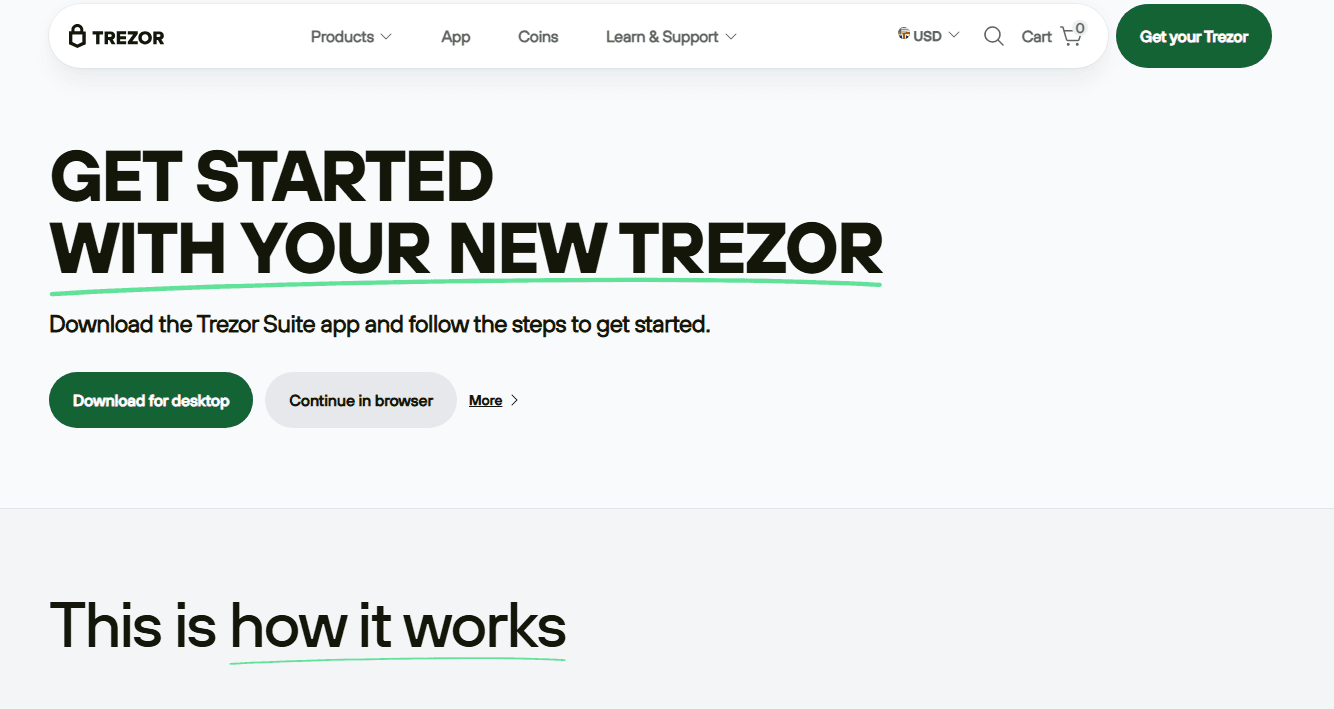
Trezor Suite – The Ultimate Guide to Secure Cryptocurrency Management
Cryptocurrency ownership comes with the freedom of self-sovereignty, but it also carries the responsibility of keeping your digital assets safe. Unlike traditional banking systems, crypto transactions are irreversible, and losing access to your wallet can result in permanent loss of funds. That is why Trezor hardware wallets, paired with Trezor Suite, provide a secure and intuitive solution for managing cryptocurrency safely.
Trezor Suite is not just software; it is a comprehensive platform designed to interface with Trezor hardware wallets. It enables users to manage crypto accounts, send and receive funds, install blockchain apps, and monitor portfolios, all while keeping private keys offline and secure. This guide covers everything you need to know about Trezor Suite—from setup and login, to advanced security practices, troubleshooting, and optimizing your crypto management workflow.
What is Trezor Suite?
Trezor Suite is the official application for Trezor hardware wallets. It functions as a bridge between your hardware device and your computer or mobile device, enabling safe cryptocurrency management. Trezor Suite is available for Windows, macOS, Linux, and also has a web-based version, providing flexibility for all types of users.
Key Features of Trezor Suite:
Portfolio Overview: Track balances for multiple cryptocurrencies in real time.
Secure Transactions: Send and receive crypto safely, with device confirmation.
Device Management: Update firmware, manage security settings, and install blockchain apps.
Exchange and Swap: Swap crypto assets directly from the Suite.
Multi-Account Support: Manage multiple accounts and wallets.
Security Alerts: Notifications for suspicious activity and firmware updates.
Trezor Suite’s interface is designed for both beginners and advanced users, offering a clean, intuitive dashboard while also giving access to in-depth security and account management features.
How Trezor Suite Works
Trezor Suite functions by connecting to your Trezor hardware wallet, which stores private keys offline. This architecture ensures that sensitive information never leaves the hardware device, drastically reducing the risk of hacking, phishing, or malware attacks.
Login and Access:
Open Trezor Suite on your computer or use the web version.
Connect your Trezor device via USB.
Enter your device PIN on the Trezor hardware wallet.
Trezor Suite detects the device and displays your accounts, portfolio, and transaction history.
This system ensures that only someone with physical access to your Trezor device and PIN can access your crypto funds.
Setting Up Trezor Suite for the First Time
Before using Trezor Suite, new users must complete the initial setup of their Trezor device and Suite.
Step 1: Download Trezor Suite
Visit the official Trezor website (trezor.io/start) and download the latest version of Trezor Suite for your platform. Avoid unofficial sources to prevent malware or phishing attacks.
Step 2: Install Trezor Suite
Follow the installation instructions for your operating system.
Launch the application once the installation is complete.
Step 3: Connect Your Trezor Device
Use the provided USB cable to connect your Trezor device to your computer.
Trezor Suite will prompt you to enter your device PIN.
Step 4: Initialize Your Device
For new users, select Create a new wallet.
Follow prompts to generate a recovery seed—a 12- or 24-word phrase used for wallet backup and recovery.
For existing wallets, select Recover wallet and enter the recovery phrase.
Once initialization is complete, Trezor Suite is ready to use. Logging in becomes as simple as connecting your device and entering the PIN.
Security Features of Trezor Suite
Trezor Suite combines hardware-backed authentication with software-based security features, providing one of the safest environments for cryptocurrency management.
Key Security Layers:
PIN Code Protection: Required for device access and transaction confirmation.
Recovery Seed: A backup phrase that allows wallet restoration in case the device is lost or damaged.
Passphrase Support: Optional feature to create hidden wallets for additional security.
Firmware Verification: Trezor Suite ensures firmware integrity, preventing tampered or outdated software from compromising security.
Transaction Verification: Every transaction must be physically approved on the Trezor device.
By keeping private keys offline and requiring physical confirmation for all actions, Trezor Suite dramatically reduces the risk of hacking.
Navigating the Trezor Suite Dashboard
The Trezor Suite dashboard provides a clear overview of your crypto holdings, accounts, and transactions.
Main Sections:
Portfolio: Displays all assets and their current market values.
Accounts: Separate sections for each cryptocurrency or wallet.
Send/Receive: Securely send or receive crypto, with on-device transaction approval.
Exchange: Swap cryptocurrencies directly within the Suite.
Settings: Manage device firmware, security settings, PIN, and passphrase.
The interface is designed for clarity, making it easy for beginners to manage crypto while still offering advanced tools for experienced users.
Common Trezor Suite Login Issues
Despite the system’s security, users may encounter occasional login challenges.
Device Not Recognized:
Ensure the USB connection is stable and use the original cable.
Restart Trezor Suite and reconnect the device.
Update Trezor Suite to the latest version.
PIN Not Accepted:
Verify correct PIN entry.
Multiple failed attempts may temporarily lock the device; use the recovery seed if needed.
Empty Accounts:
Synchronize accounts in Trezor Suite settings.
Make sure all relevant cryptocurrency apps are installed on the device.
Application Crashes:
Reinstall Trezor Suite from the official website.
Check operating system compatibility.
Using Trezor Suite for Transactions
Trezor Suite ensures that every transaction is secure and confirmed on the hardware device.
Sending Cryptocurrency:
Open Trezor Suite and navigate to the Send tab.
Enter the recipient address, amount, and currency.
Review the transaction details on your Trezor device.
Confirm the transaction physically on the device.
Receiving Cryptocurrency:
Open the Receive tab.
Copy the address displayed in Trezor Suite.
Provide the address to the sender.
Confirm that the address matches on your device before receiving funds.
Advanced Features of Trezor Suite
Multi-Account Management:
Trezor Suite allows users to manage multiple wallets and cryptocurrencies from a single interface. This is useful for users with diverse portfolios or separate accounts for different purposes.
Passphrase-Protected Wallets:
Adding a passphrase creates a hidden wallet that is invisible without the correct passphrase. This adds an extra layer of security.
Firmware Updates:
Trezor Suite ensures your device firmware is always up-to-date, which is critical for security and compatibility with new cryptocurrencies.
Portfolio Export:
You can export your portfolio view for offline record-keeping without compromising security.
Recovering Access to Trezor Suite
If your Trezor device is lost or damaged:
Obtain a new Trezor device.
Open Trezor Suite and select Recover Wallet.
Enter your recovery seed on the new device.
All accounts and balances will be restored.
Your recovery seed ensures access to funds even if the physical device is unavailable.
Best Practices for Trezor Suite
Only download Trezor Suite from the official website (trezor.io/start).
Never share your recovery seed online.
Use a strong PIN and, optionally, a passphrase.
Keep your recovery seed in a secure offline location.
Regularly update Trezor Suite and device firmware.
Verify addresses before sending cryptocurrency.
Frequently Asked Questions (FAQ)
Q1: Can I access Trezor Suite without a hardware device?
A1: No. The Trezor device is required to authenticate and manage your wallet.
Q2: Can I use Trezor Suite on multiple computers?
A2: Yes, but each session still requires connecting your Trezor device.
Q3: Is Trezor Suite secure against hacking?
A3: Yes. Private keys never leave the hardware device, and all transactions require physical confirmation.
Q4: What should I do if my Trezor device is lost?
A4: Use your recovery seed on a new Trezor device to restore access to your funds.
Q5: Can I manage multiple cryptocurrencies in Trezor Suite?
A5: Yes. Trezor Suite supports a wide range of cryptocurrencies and allows multi-account management.
Conclusion
Trezor Suite is a robust, secure, and user-friendly interface for managing cryptocurrencies. By combining hardware-based authentication with a powerful software interface, it provides users with complete control over their crypto assets while minimizing security risks.
Understanding Trezor Suite setup, login procedures, security features, and best practices is essential for any crypto user. With Trezor Suite and a Trezor hardware wallet, you gain one of the safest and most reliable ways to manage, send, receive, and store digital assets.